


Cheaper AI should encourage people and businesses to use much more of it. The companies supplying that compute will have to build enough capacity without knowing exactly how much customers will buy, or at what price. The risk behind warnings of a bubble is that, when in the future revenues don’t match the cost of expansion, credit will get assessed more harshly. This past week, for example, investors sold off bonds issued to finance data centers, including debt issued by CoreWeave.
Getting those centers into service depends on equipment, most of all, but also electricity and permission to build. Regulators and planning authorities can shape the decisions on electricity tariffs or construction permits, and set the rules for who pays for additional grid infrastructure and what developers must owe to host communities. In turn, governments buying AI systems can negotiate the right to check whether suppliers are meeting their contractual obligations.
Here’s five charts from this year’s State of AI Report illustrating why this is an especially critical moment for financial wagers, physical bottlenecks, and governments’ leverage.
1. Plunging prices are not the same as guaranteed revenue
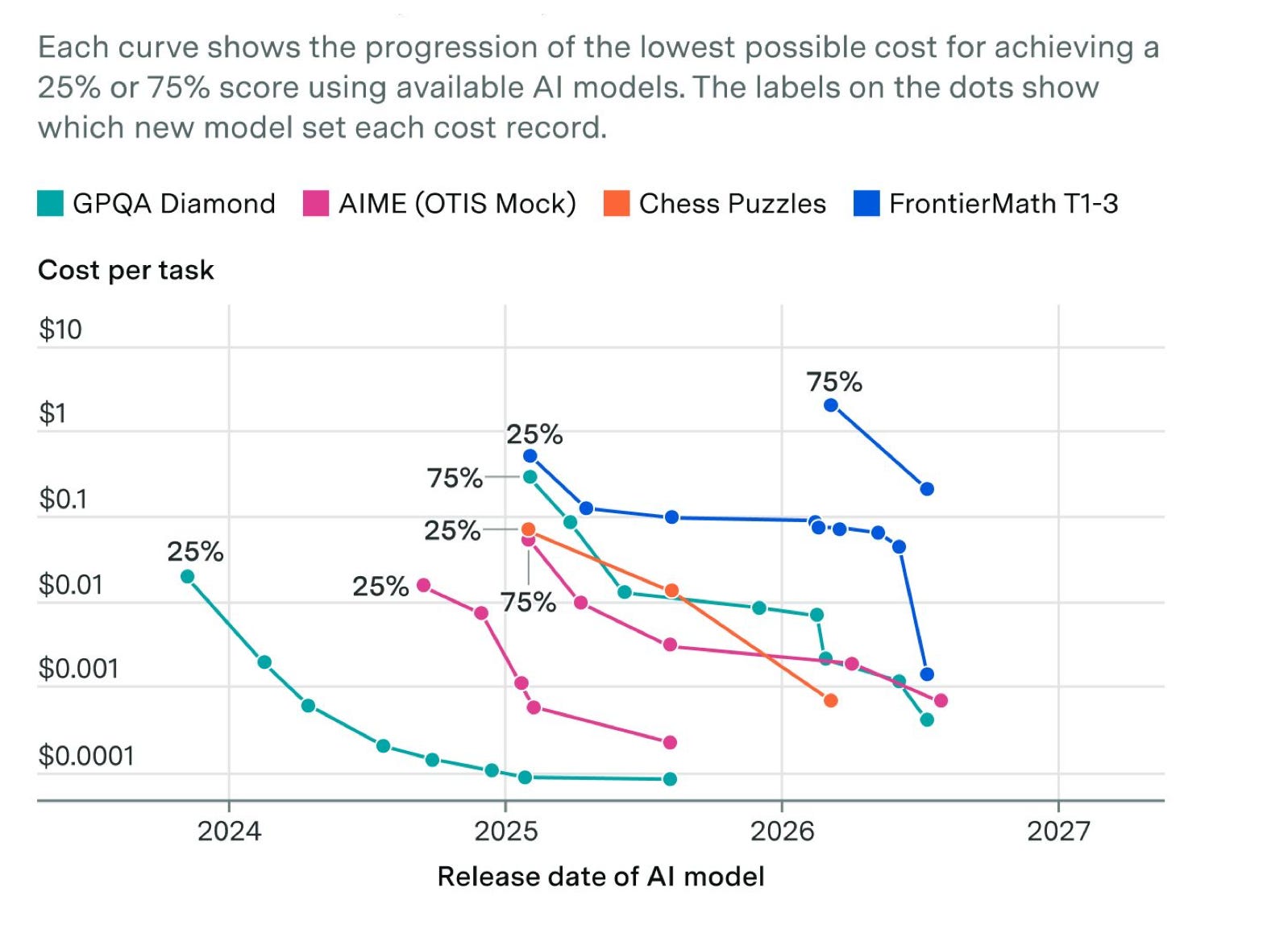
Epoch estimates that the minimum cost to reach a given level of AI performance on five standard benchmarks has fallen by roughly 47% a quarter since 2023.
When AI gets that cheap, businesses start using it for tasks that used to be too expensive. At the same time, more efficient models need less computing power to do existing work. Companies building data centres are betting that cheaper AI will generate enough new use to make that expansion pay. Nobody knows yet if that math will work out.
2. Cloud giants have to spend the cash up front
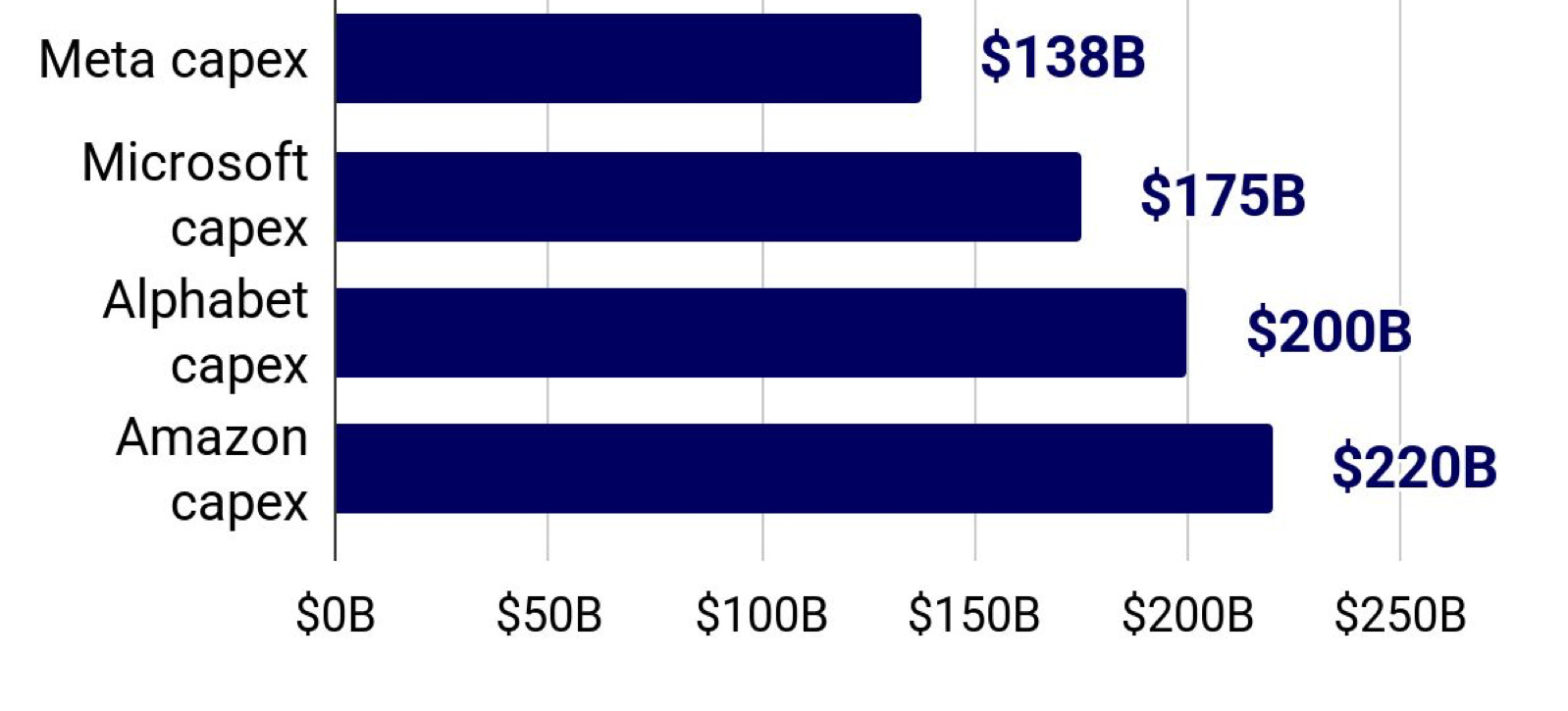
Despite that uncertainty, Amazon, Alphabet, Microsoft, and Meta plan to spend around $733 billion in total capital expenditures in 2026.
The risk sits in the gap between spending money and collecting it. In his shareholder letter, Amazon’s Andy Jassy points out that the company typically pays for land, power, buildings, and equipment six to 24 months before it starts billing customers for that capacity. Even with customer commitments in hand, the builders carry the upfront cost of getting the physical sites ready.
3. Paper megawatts do not run servers
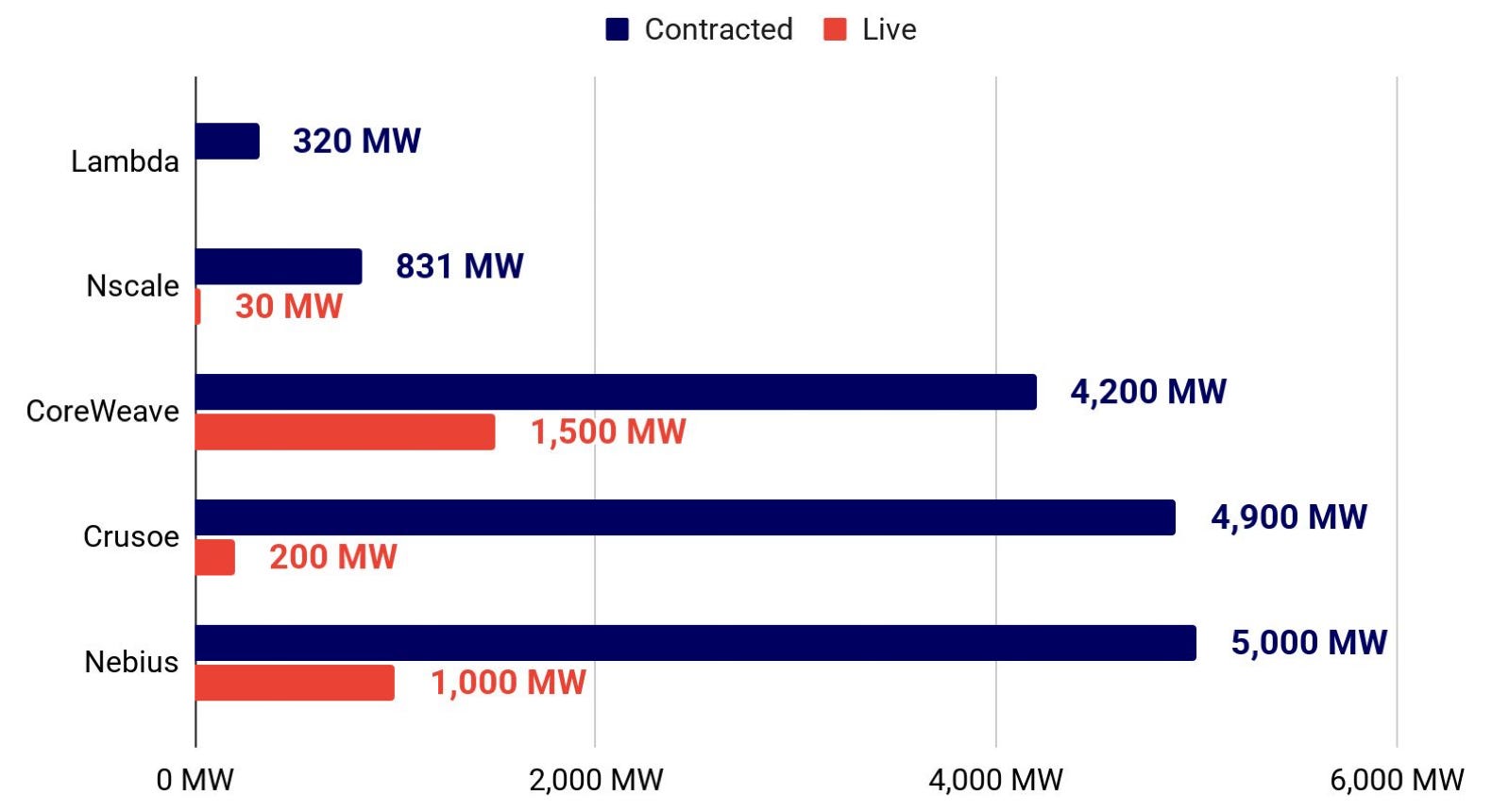
Announcing a data centre is easy; getting it plugged into the grid is hard. A facility cannot provide computing until the building, the high-voltage connection, and the chips are all ready in the same place at the same time.
Look at CoreWeave. The AI cloud provider reported 1.5 GW of active power and 3.7 GW contracted for the same quarter, with the contracted total rising later to the 4.2 GW shown in the chart. Some of that power is for facilities still being developed, so the gap alone does not establish construction delays.
The chipmaker TSMC is checking those physical conditions for itself. This past week, it told investors it was sending teams to check US data-centre construction and power supplies as part of its capacity planning. It said the initial feedback was positive and remained confident in AI demand.
4. “Sovereign AI” buyers still depend on US hardware
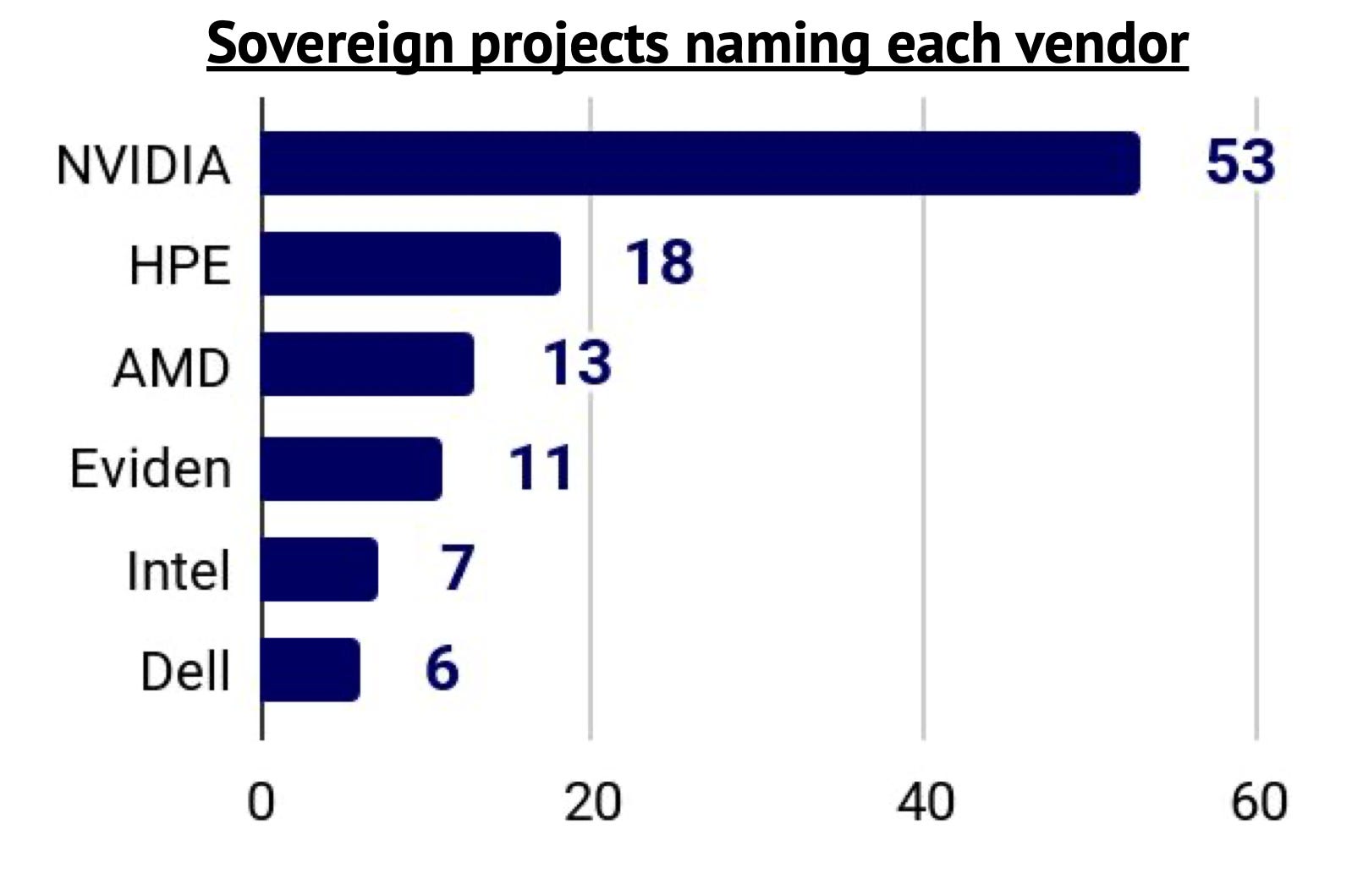
Governments buying that capacity face a related problem: they need to know what control comes with it. For those building domestic AI facilities, keeping sensitive public data inside national borders is part of the promise of “sovereign AI”.
In practice, though, a domestic building can still run on foreign technology. The report’s snapshot includes projects using chips from NVIDIA and servers from companies like HPE. Where advanced chips require US export licences, a government can have the budget and the site ready, yet still need Washington’s permission to get the hardware.
Governments relying on foreign suppliers need to use their purchasing power to write tighter contracts. Before handing over public funds, a government should lock down what control it actually gets: who can access sensitive data, who runs the systems day to day, and what happens if a foreign supplier pulls out.
5. Local opposition is already delaying projects
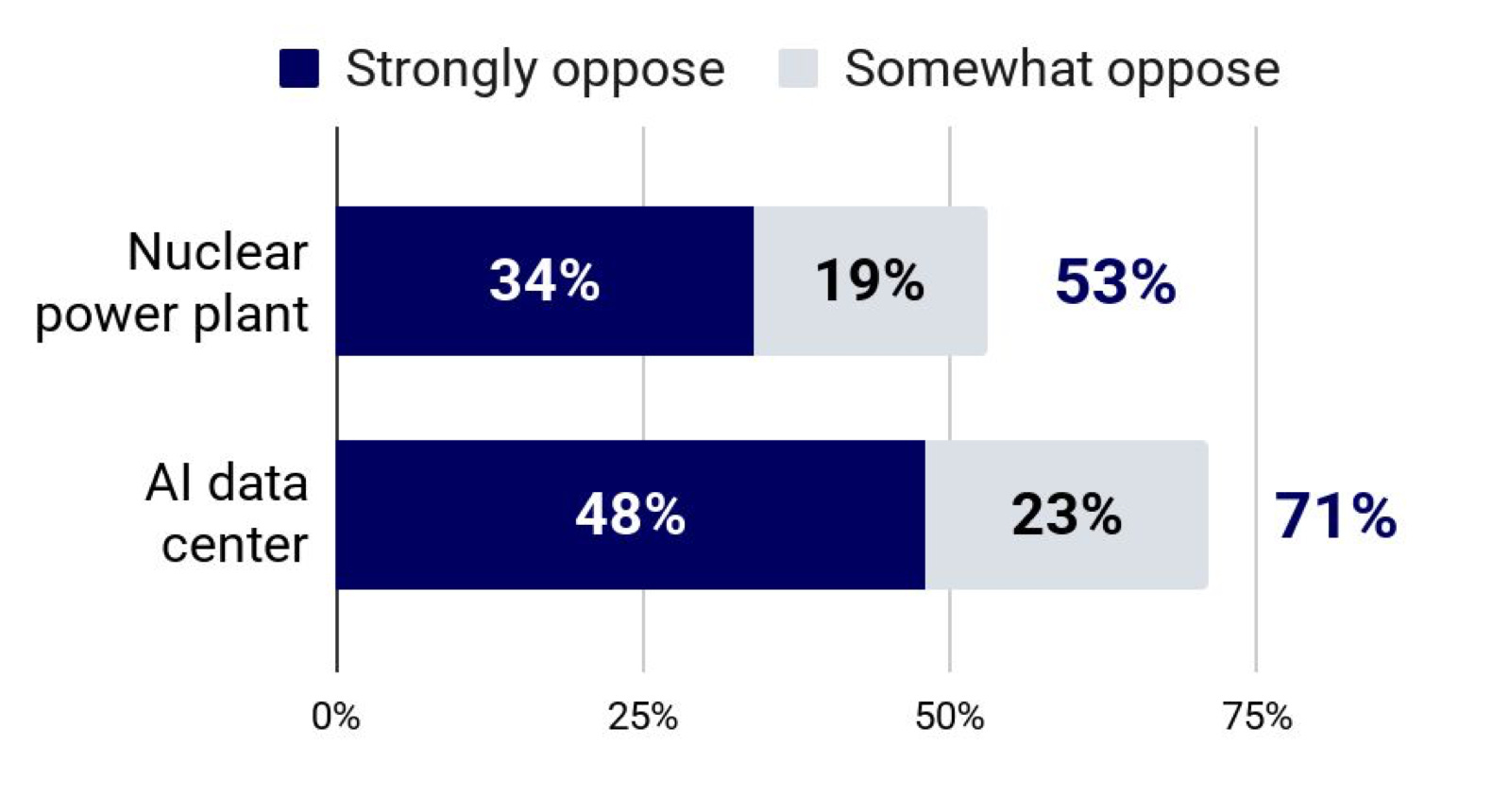
To the people asked to live next to one, a data center is a giant warehouse that drinks local water and eats up local power to serve customers somewhere else. In a March 2026 Gallup poll, 71% of US adults said they would oppose an AI data center in their area, more than the 53% who would oppose a nuclear power plant.
Developers promise economic growth and construction jobs, while residents worry about noise, water use, and higher electricity bills. That local pushback is already slowing the buildout: Data Center Watch counted at least 45 US projects, worth nearly $68 billion in planned investment, that were blocked or delayed by local opposition in the second quarter of 2026.
People can want the benefits of AI and still refuse to subsidize a tech company’s electricity bill. Even CoreWeave’s chief executive has said developers should pay for their own grid upgrades so the cost does not fall on households.
Smart regulators are turning that principle into binding rules. Ohio’s utilities commission approved a dedicated electricity tariff for large new data centers served by AEP Ohio. Developers must pay for a high minimum level of power even if they end up using less. Under AEP’s connection terms, they must also reimburse the full buildout costs if they cancel, or delay a project by more than twelve months, before the target connection date. Regulators wrote the rule to protect ordinary households from paying for stranded grid investments, though data center industry groups appealed the decision.
This past week, Pennsylvania Governor Josh Shapiro petitioned to join a regulatory case seeking stronger protections, arguing that large data centers must pay for the transmission upgrades they cause.
Local authorities need to apply the same level of scrutiny to claims about permanent jobs and water use, making sure projects can be verified after they open, and have remedies if they don’t meet specific commitments. That approval process is the moment to agree those obligations, while the company still needs something from the place it wants to build.
Whether the AI buildout pays off for investors or ends in a glut, host communities will still be left with a pile of physical facilities and contracts once the boom has waned. Governments buying compute should settle access, oversight and exit terms before signing a contract. For authorities approving new facilities, the time to set the terms really is before the concrete is poured.
Charts cropped from Nathan Benaich and Air Street Capital, State of AI Report 2026. Report content is licensed under CC BY 4.0.